|
|
|

|
|
|
Black Friday and New Workshops Galore!
|
|
|
REACH YOUR APEX
Late November Updates
It is almost Thanksgiving in the US. This means a many of you will be dealing with family, travel, and holiday headaches. I'm no exception. Every year is a trek back to southeast Kentucky to celebrate the holiday. For many, many reasons, it's a stressful time, but in the end, I must begrudgingly admit it is also an enjoyable time. 🤷♂️
|
It's also the unofficial kickoff of the holiday shopping season. I almost didn't do a Reach Your Apex Black Friday sale, but people are looking for deals and I wanted to do something for the mailing list.
|
BLACK FRIDAY MAILING LIST EXCLUSIVE
For our mailing list members only, use the exclusive checkout code BLACK FRIDAY 2023 to receive 15% off your Reach Your Apex order. This deal starts today and ends next Monday night. The coupon is good for all one-shot workshops and multi-session courses. Editorial services are not eligible.
|
You'll find our upcoming one-shot workshops and courses listed below. Head over to the website catalog for a full listing of educational opportunities!
|
|
Remember, the checkout discount code is BLACK FRIDAY 2023.
|
|
|
|
|
|
|
We asked Apex Magazine editor-in-chief Lesley Conner "What advice would you give to genre short fiction writers?"
|
This is a question I find myself asking when I’m reading submissions, and to be frank, it’s one of the biggest reasons I reject stories. I’ll get a page in and find myself scanning the text rather than truly reading because I’m searching for some reason to keep going. The moment I catch myself scanning, I know the story isn’t for me and I pass.
|
What can you, as a writer, do to keep me from scanning? This isn’t an easy question with a one size fits all the answer, but I can give you a few tips.
|
- Rather than trying to shove everything into the opening of a story (all the characters, voice, tone, expansive world-building), nail down who the story is about (this informs voice, tone, and character development), where we are (begins world-building and gives a hint to genre) and get the action moving. The action of the story should tell the reader what is at stake, and knowing who the main character is and what is at stake for them is what builds a connection to your reader and makes them care.
- Remember I said that at about a page is where I really start to ask myself why I should care. Go back and read that first page of your story. Do you introduce your main character, give the reader a good sense of where we are without bogging the story down with too many details, and start the action that will lead to the climax of the story? The first two are relatively easy: you can introduce a girl walking through a park and you’ve introduced the character and setting, but the third is more difficult. Yes, I see that the girl is walking and that technically is an action, but does that action lead us to the climax of the story? Does it lead us to why we should care about the girl? Could be yes—the girl’s entire family was attacked and eaten by a group of vampires and the girl ran away and is now walking through the park because she’s afraid to go home. Hello! I suddenly care about this orphaned girl as she’s trying to figure out how to keep herself safe. Could be no—the girl is walking to work and at her workplace is where the real action of the story is going to begin. Don’t show me her walking to work. It doesn’t matter and I don’t care. The story needs to start at work, where the real problem of the story begins.
- Be mindful of details. If you watch Apex’s Snap Judgment series, then I’m sure you have heard some form of these two statements, repeatedly: There’s too many details, it bogs down the story. Or there’s not enough detail, I have no sense of where we are. Finding that sweet spot between not having enough detail or weighing the story down with too many is a fine line, and it is really easy to miss the mark. You need to sprinkle in enough details so the reader can see, small, taste, hear, and feel the story, without giving so many that the actual plot gets lost.
|

|
|
Lesley Conner is the editor-in-chief of Apex Magazine. Her most recent projects include the anthologies ROBOTIC AMBITIONS and DO NOT GO QUIETLY.
|
|

|

|
|
|
|
|
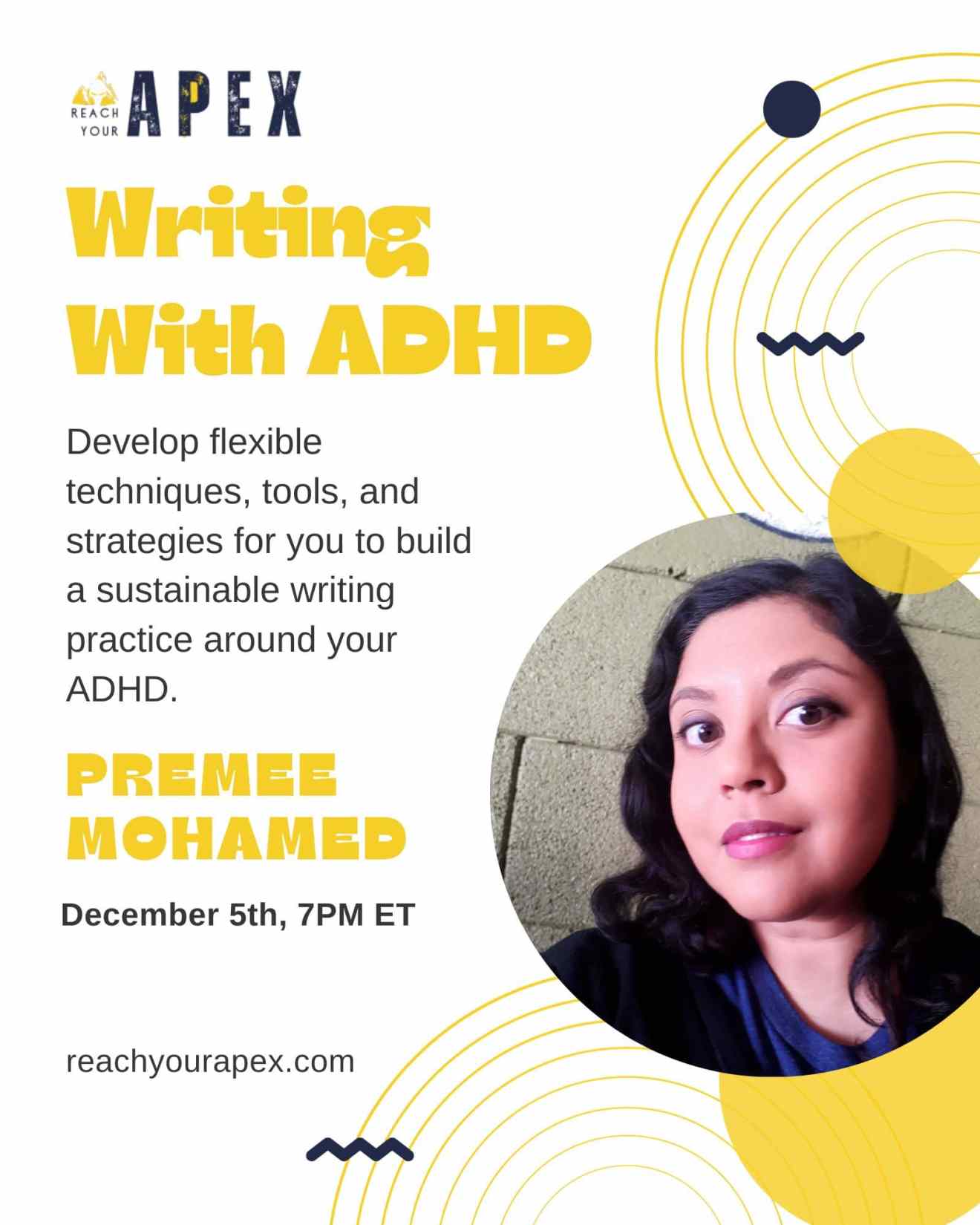
Writing with ADHD
|
|
Returning due to student requests!
|
|
|
|
$30.00
Instructor: Premee Mohamed
|
|
Hyperfocus, no focus, uncontrollable focus, stolen focus—no matter what tries to keep you from your story, this class will develop flexible techniques, tools, and strategies for you to build a sustainable writing practice around your ADHD, as well as stay on top of the paperwork and communication required in publishing.
|
|
|
|
|
|
|
|
Getting into Character
|
|
Arley Sorg is the former editor of Fantasy Magazine and a literary agent.
|
|
|
|
$30.00
|
Characters. Who needs ‘em? Well, many of your stories probably do! How do you write interesting characters? How do you make them feel real? How can characters be an engaging and compelling part of the narrative?
|
|
|
|
|
|
|
|
Dressing the Skeleton: Long Form Writing for Short Form Writers
|
|
|
|
|
$30.00
|
Learn and acquire tips, strategies, tools, and techniques for writing long form specifically targeted towards those who are more acquainted with short fiction (short stories, flash fiction, micro fiction, drabbles).
|
|
|
|
|
|
|
|
FOR WRITERS: Avoid a Passive Main Character
|
|
|
One of the biggest mistakes writers make, especially in sci-fi/fantasy, is the passive main character. There’s a guy—let’s call him Bob—who is suddenly transported to an amazing fantasy world. The world is awesome! There are dragons everywhere. He’s surrounded by unicorns. He’s dragged by ruffians onto a pirate ship. But things are happening to Bob. The dragons capture him, and …
|
|
|
|
|
|
Snap Judgement is a quarterly live stream featuring three professional editors who offer feedback on the first page (up to 250 words) on unpublished genre short stories submitted by Apex Magazine subscribers and Patreon backers.
|
The video of the event is available for viewing.
|
|
|
|
|
|
|