|
|
|

|
- Tips on writing dialogue from accomplished authors
- Discount codes for our next live workshops
- Submissions open
- Discount from our friends at Scribophile
- Care to drabble with us?
|
|
|
|
|
|
|
|
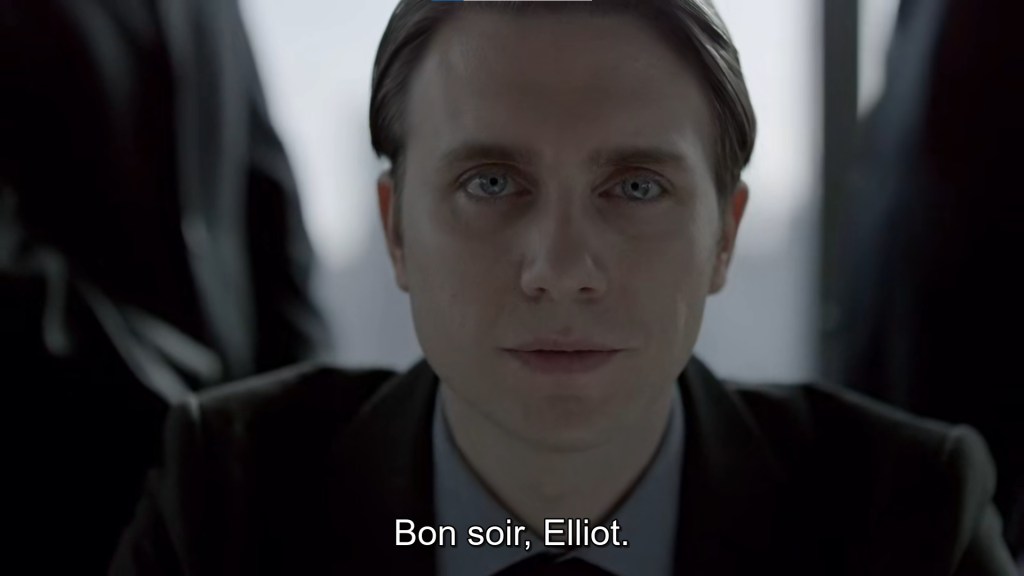
Image: memorable dialogue ("Bon soir, Elliot") from the very uptight Tyrell Wellick in the TV series, “Mr. Robot.”
|
As Reach Your Apex instructor and award-winning author Premee Mohamed says dialogue can be the most noticeable thing about your story—for better or for worse. Famed writing coach Robert McKee warns that poorly written dialogue can kill an otherwise great story. So, it’s reasonable to be a little stressed when you're writing the things your characters say.
|
It can help to approach dialogue as a tool in your toolbox rather than a daunting wall to climb. Dialogue can be an effective way to keep readers engaged in a scene, and characters with quirky ways of talking are memorable. We all love quoting our favorite character’s best lines. When tackling dialogue you can ask yourself, “What’s just the kind of thing this character would say in this situation?” Readers find it deeply gratifying when a character says something very, well, in character. And asking yourself that question can have the added benefit of helping you get to know your character better.
|
Another concept that can be helpful is thinking of dialogue as having a job to do. At its core, dialogue is action! Characters use their words to make things happen. At the same time, the author uses those words to reveal something about that character… something they perhaps don’t know about themselves. These two things make up the job we hire dialogue to do. When you’re struggling with a scene, ask yourself, “Is this a job for dialogue?”
|
Of course, the devil is in the details. And it's best to let the true professionals help with those. For more guidance, here are five quotes from diverse and accomplished authors on the subject of writing dialogue. Now, a handful of quotes isn’t a complete guide. Rather, it’s a starting point. The link to each source is provided. If one or two of these quotes “speak” to you (cough), you can dive deeper and soak up more wisdom from a voice that resonates with you.
|
|
|
|
“It’s dialogue that gives your cast their voices, and is crucial in defining their characters–only what people do tells us more about what they’re like, and talk is sneaky: what people say often conveys their character to others in ways of which they–the speakers–are completely unaware.”
|
|
Stephen King – American author known as the “King of Horror”
Source: “On Writing” by Stephen King
|
|
|
What is the job of dialogue? Conversation has no real purpose or direction. Dialogue, however, needs to move the story forward, provide information, and help with characterization. It also has authorial intent, the reason the author put it there, and character intent, why the character is saying these things.
Another part is to be entertaining, funny, to reward the reader for reading. It conveys information, but we mask that to keep the reader from noticing. Beware the unmasked info dump! Evoke an emotional response. Transition. Questions and answers. Sometimes you need to cut dialogue, because it doesn’t move the story forward.
|
|
Dan Wells, Mary Robinette Kowal, Maurice Broaddus, and Howard Tayler – from “Writing Excuses: The Job of Dialogue”
Source: Writing Excuses
|
|
|
|
Strong dialogue in fiction should not sound like conversation, because conversation is not dialogue. Dialogue is narrative, and dialogue has a job. The purpose of dialogue is not for the reader. It is never for the reader. It is always for the benefit of the other characters, because fictional characters do not know that they are fictional characters—and they should not be talking like they are.
|
|
Premee Mohamed – multi-award-winning author of the ‘Beneath the Rising’ series of novels and several novellas
Source [video]: FanFiAddict
|
|
|
|
All I can recommend is to read/speak your dialogue aloud. Not whispering, not muttering, OUT LOUD. (Virginia Woolf used to try out her dialogue in the bathtub, which greatly entertained the cook downstairs.) This will help show you what’s fakey, hokey, bookish — it just won’t read right out loud. Fix it till it does. Speaking it may help you to vary the specch mannerisms to suit the character. And probably will cause you to cut a lot. Good! Many contemporary novels are so dialogue-heavy they seem all quotation marks — disembodied voices yaddering on in a void.
|
|
Ursula K Le Guin – considered one of the greats of speculative fiction, best-known for “A Wizard of Earthsea” and “The Left Hand of Darkness”
Source: UrsulaKLeGuin.com
|
|
|
|
The more often you repeat something, the less effect it has. You cannot repeat any device—words, phrases, beats, qualities of emotion. You cannot repeat anything with effect. There’s a kind of “rule of thirds.” The first time you use a line, it’ll have its full impact. If you repeat it, it’ll have half or probably much less than half of that impact. If you’re foolish enough to do it a third time, it’ll not only not have the effect that you want, it’ll swing around behind you and kick you in the ass and have the opposite effect. What you perhaps think is serious, the audience will turn around and laugh at because of the repetition.
|
|
Robert McKee – author, lecturer and story consultant who is known for his “Story Seminar,” and his best-selling guide, “On Story.”
Source [video]: StoryLogue
|
|
|
|
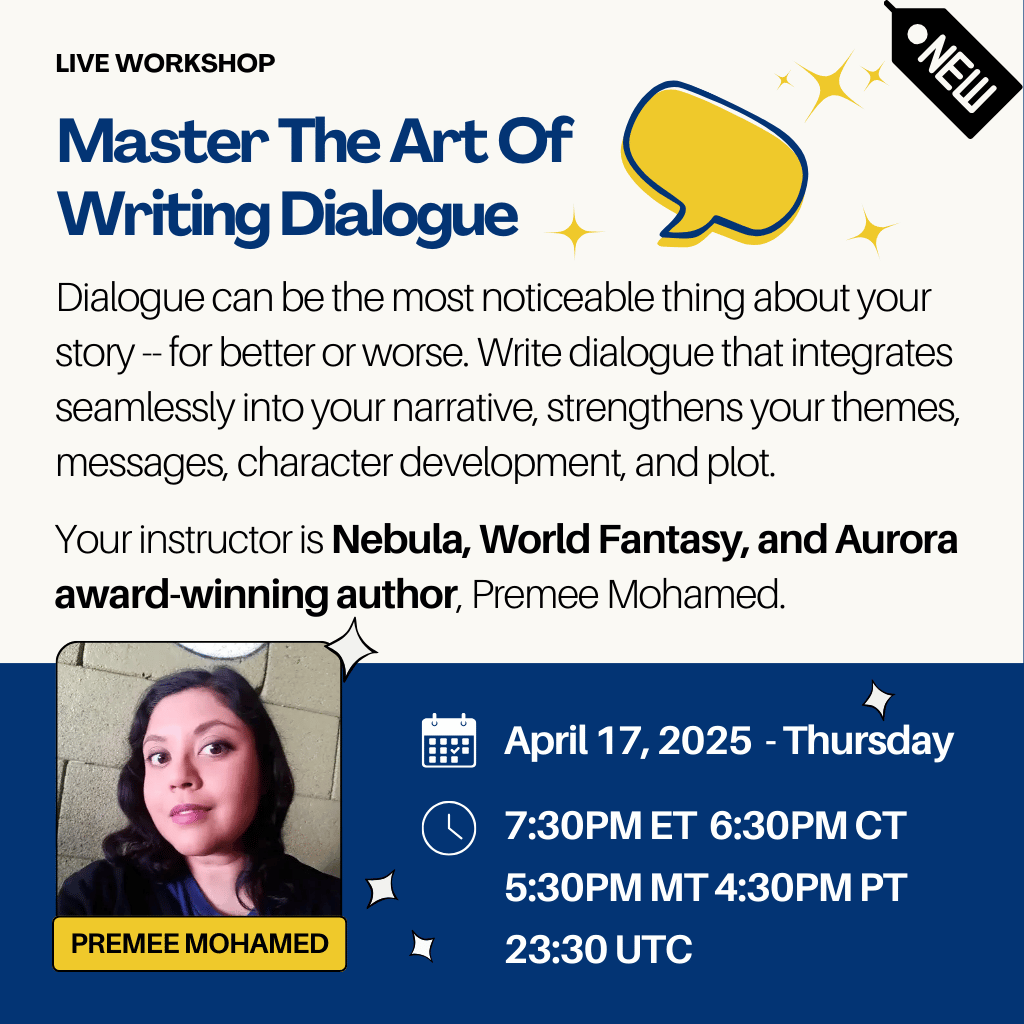
Our next live workshop
|
April 17 - Take $10 off with coupon code aod10 at checkout!
|
|
|
|
|
|
Join award-winning Indo-Caribbean scientist and speculative fiction author, Premee Mohamed. Learn how to write dialogue that integrates seamlessly into your narrative, strengthens your themes, messages, character development, and plot.
|
$39.00 – $49.00
|
|
|
|
|
|
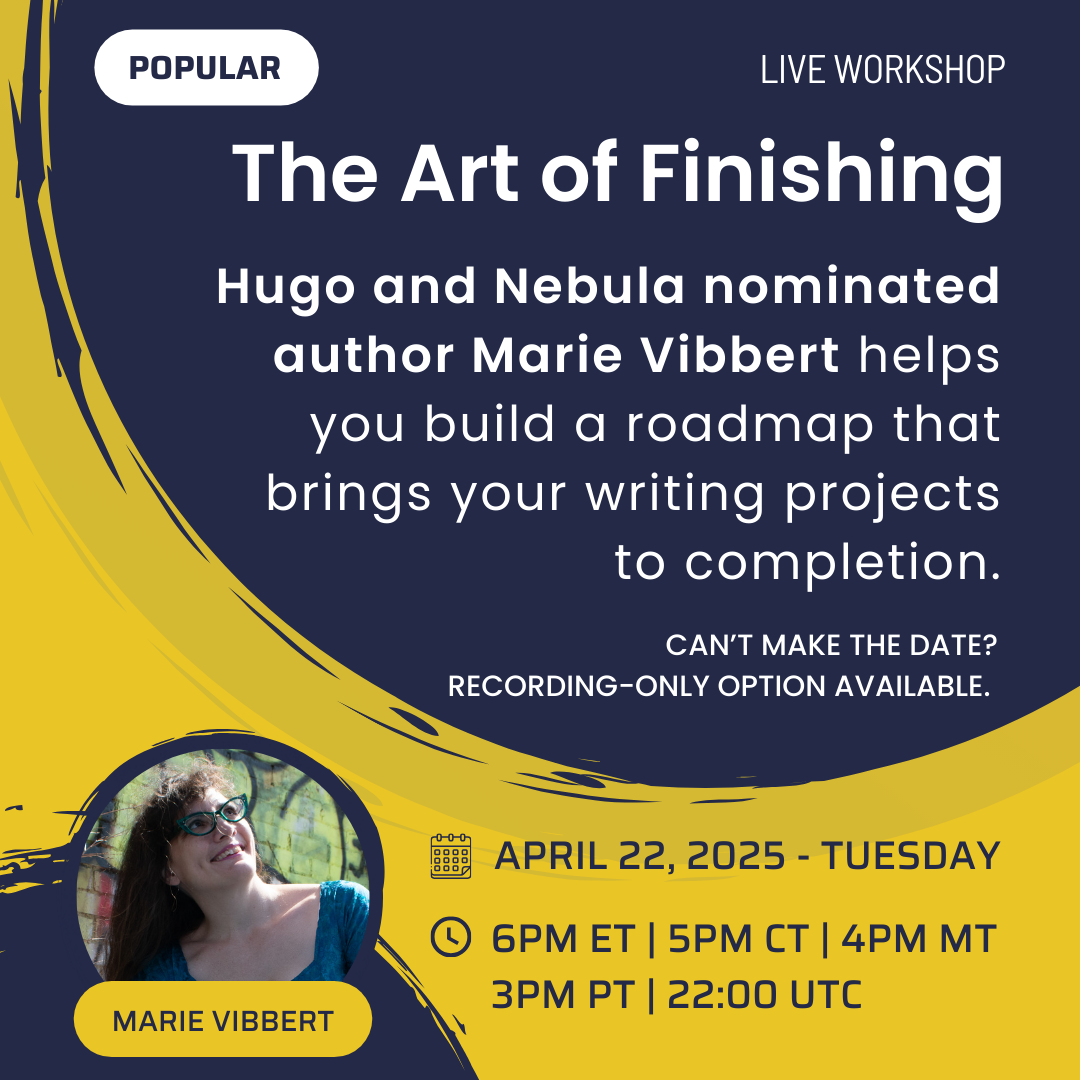
April 22 - Take $10 off with coupon code finish10 at checkout
|
|
|
|
|
|
Hugo- and Nebula nominated author Marie Vibbert helps you build a roadmap that brings your writing projects to completion. Do you have three quarters of a novel? Just a start? Just an end? Is the messy middle holding you back? Let's take a deep dive into what is stopping you from finishing your novel.
|
$39.00 – $49.00
|
|
|
|
|
Submissions open
|
|
|
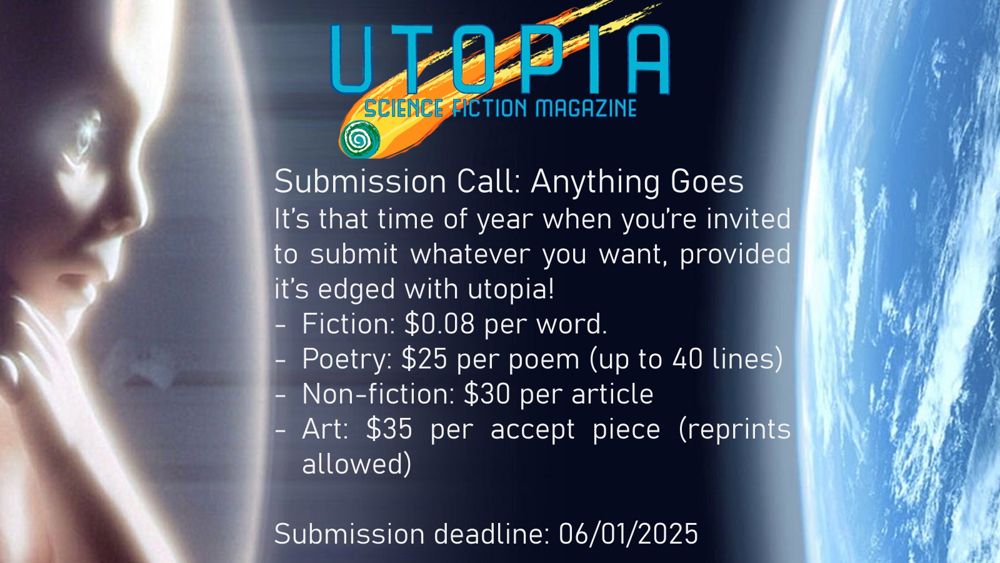
Utopia Science Fiction Magazine open submissions call: Anything Goes
|
|
It's that time of year when you're invited to submit whatever you want, provided it's edged with utopia! Details:
|
|
|
|
Save 20% at Scribophile - the online writing community
|
You’ve spent a lot of time writing your story. But how can you make it perfect before you start thinking about publishing?
|
Scribophile is a writing group focused on getting you feedback on your manuscript. It's one of the largest online writing groups out there. Their points-based peer critique system guarantees you’ll get feedback from writers from all walks of life. You can then use that feedback to polish your writing before you take the next step in your publishing journey.
|
It costs nothing to join. If you want an ad-free experience along with a bunch of other upgrades you can go for the paid membership at just $15 a month.
|
We've partnered with Scribophile to give The Reach Your Apex community 20% off your first purchase. Use this discount code: APEX20
|
I've personally been a member for years and have found giving critiques to be as valuable as getting critiqued. I've also met lots of fellow writers there.
|
|
|
|
Care to drabble with us?
|
A drabble is a piece of writing that’s exactly 100 words long. It’s also a quick way keep your hand in the writing game, no matter how busy you are. Writing weekly drabbles is a great way to sharpen your brevity skills, as well. And oh yeah, they're fun!
|
Starting soon, Reach Your Apex will host a weekly themed drabble challenge. Everyone who participates will have their submission published on the web site and on our social media.
|
|
Are you game? Let us know by signing up to be notified when the weekly drabble launches. Once we have enough people interested, we’ll ring the bell! Click the button below to sign up to be notified.
|
|
|
|
|
|
Thank you so much for being a newsletter subscriber. We love our supportive, weird, and wonderful community. Don't hesitate to reply to this email if you have something to tell us. I read every email and will respond.
|
|
|
|
|
|
|